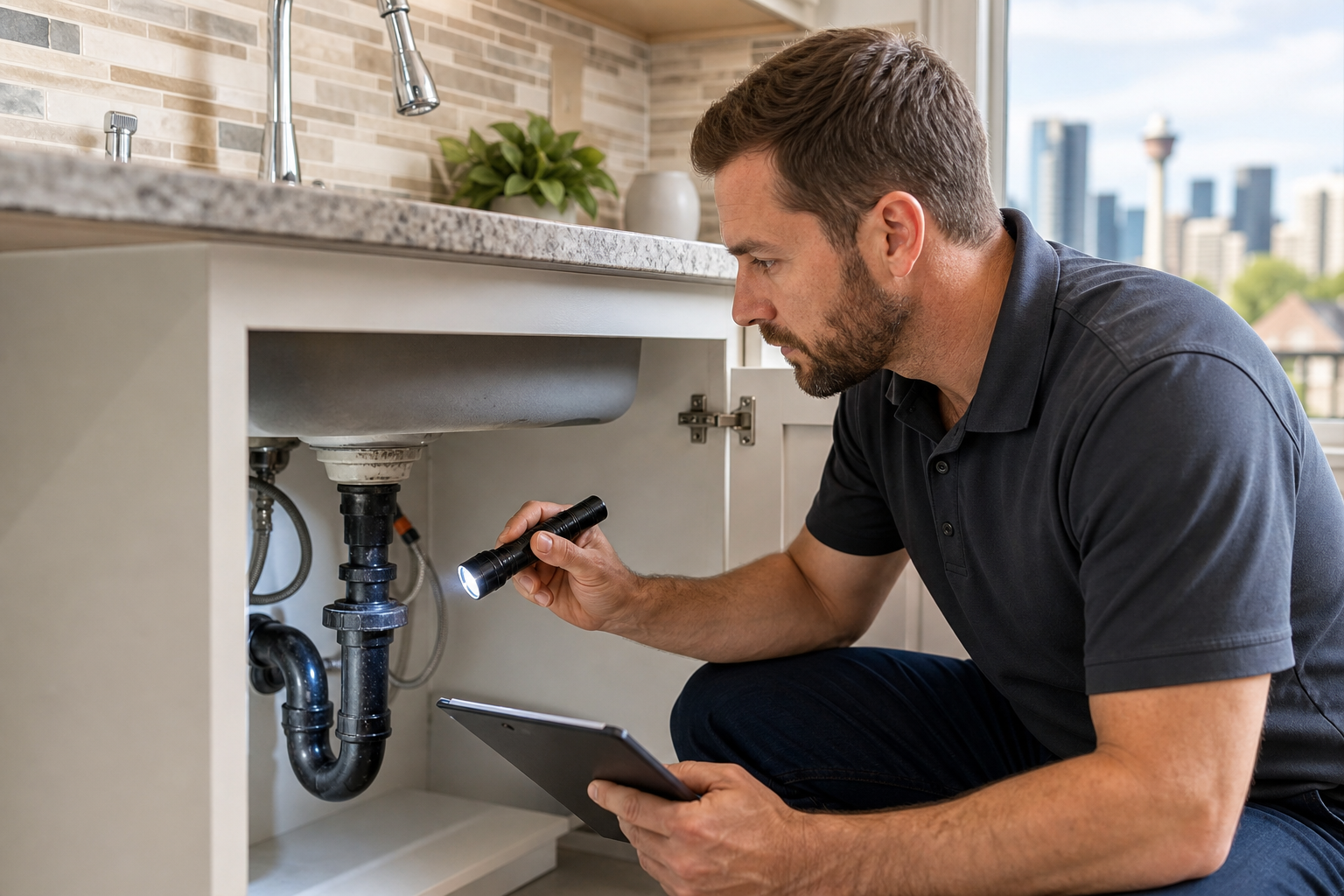
Which plumbing inspection warnings matter most when buying a home in Calgary?
When you are buying a home or condo in Calgary or elsewhere in Alberta, plumbing problems can turn a good decision into a costly surprise. This article prioritizes the plumbing inspection warnings that matter most, shows what to spot at a viewing, explains why each issue matters locally, and gives exact questions and follow-up steps you can use with your inspector or plumber.
Top 8 plumbing inspection warnings to spot at a viewing
1. Signs of past sewer backup or recurring basement flooding
What to look for: a sewage-like odour in the basement, brown staining along floor drains, patch repairs to floor or wall finishes, or a history disclosed by the seller or neighbours.
Why it matters locally: Calgary and Alberta can experience stormwater and sewer pressure that lead to backups, and repeated events increase health and repair costs.
Immediate next step: Ask the inspector if a sewer camera inspection or a municipal history check is recommended, and ask a licensed plumber about a backwater valve. The federal guidance on backwater valves recommends asking a professional to evaluate whether one is effective for your home and to determine installation needs when backups are a concern (Backwater valves - Canada.ca).
2. Persistent damp, mould or water staining
What to look for: discoloured paint or plaster, peeling wallpaper, fuzzy black or green mould growth around baseboards, and musty smells in basements, utility rooms, or under sinks.
Why it matters locally: Cold climates with freeze-thaw cycles can worsen hidden leaks and make mould remediation more expensive. Concealed moisture can rot framing or interior finishes.
Immediate next step: Note exact locations for the inspector, request moisture readings and photographic documentation, and consider a targeted leak investigation or thermal imaging if the source is unclear.
3. Slow drains and gurgling sounds
What to look for: sinks, tubs, or floor drains that empty slowly, toilets that bubble when other fixtures drain, or gurgling through vents.
Why it matters locally: Slow flow may indicate partial blockages in the interior plumbing or a compromised sewer lateral that can cause backups during heavy rainfall.
Immediate next step: Ask the inspector whether a plumber should run a drain camera or hydro-jetting diagnostic, and get a quote for any recommended clearing or repair.
4. Low or fluctuating water pressure
What to look for: weak shower spray, slow-filling tubs, or water pressure that changes dramatically when other fixtures run.
Why it matters locally: Pressure issues can reflect failing fixtures, blocked lines, or municipal supply problems. Older supply pipe materials can compound the issue.
Immediate next step: Have the inspector test pressure at an accessible tap and flag whether pressure regulators, service line replacement, or repairs are likely.
5. Visible corrosion or galvanized piping
What to look for: greenish or white crust on copper or brass fittings, rust on steel pipes, or old galvanized pipes showing heavy scaling.
Why it matters locally: Galvanized pipes can be near the end of useful life and reduce flow while increasing failure risk. Replacement can be disruptive and costly.
Immediate next step: Request a certified opinion on remaining service life and a plumber’s estimate for partial or full repiping if corrosion is significant.
6. Water heater age, leaks, missing drip pan or missing strapping
What to look for: check the water heater’s data plate for manufacture or install date, visible rust or leaking at the base, absence of a drain pan in upper-level installations, and missing earthquake or safety strapping where applicable.
Why it matters locally: Older water heaters fail unexpectedly and can flood. For apartments and multi-storey homes a missing pan or strap increases risk and may violate local requirements.
Immediate next step: Ask the inspector for the unit’s age and condition, and get a quote for replacement if it is near the typical life expectancy or shows deterioration.
7. Exposed or uninsulated supply pipes that risk freezing
What to look for: water lines running along exterior walls, uninsulated crawlspaces, or plumbing in unheated garages or attics.
Why it matters locally: Calgary’s winter temperatures increase the risk of frozen pipes, which can burst and cause severe water damage.
Immediate next step: Ask whether the inspector recommends insulating or rerouting pipes, and obtain a licensed plumber’s estimate for mitigation before closing.
8. Missing sump pump or missing backwater valve where flood or sewer risk exists
What to look for: no sump pit or pump in a below-grade mechanical room, or no backwater valve on the sanitary line where neighbourhood backups are known.
Why it matters locally: Homes at lower roadway grade or in areas prone to stormwater overload benefit from sump pumps and backwater valves to reduce flood and sewage risk. Canada.ca advises consulting a professional installer to confirm suitability and design for a backwater valve (Backwater valves - Canada.ca).
Immediate next step: If absent, ask for a costed estimate for installation and consider negotiating repair credits or contingency conditions in your offer.
Why these plumbing warnings matter in Calgary and Alberta
Colder winters increase freeze risk for exposed plumbing, while heavy spring melt and intense storms can stress sewer systems and raise the chance of backups. Older inner-city homes often contain dated piping and hidden runs in walls, increasing repair complexity and cost. Condos can have building-wide sanitary and drainage issues that are revealed only through reserve fund studies and meeting minutes, so buyers should combine on-site checks with document reviews when appropriate. For a broader look at how a home inspection fits your purchase decision, see our home inspections Calgary resource (home inspections calgary smart guide safe home purchase).
What a professional plumbing inspection covers and what it does not
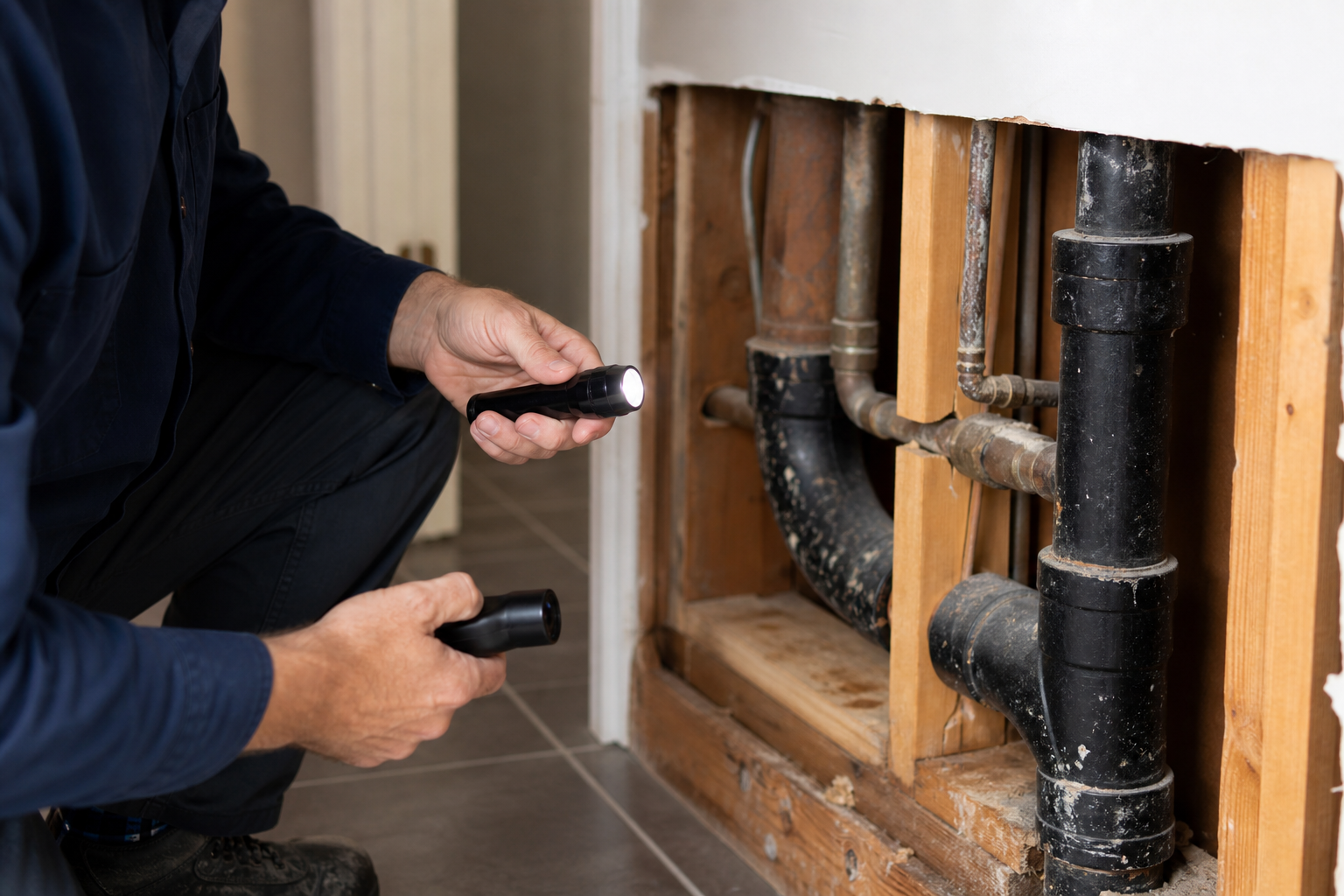
Licensed plumbers and certified home inspectors perform complementary checks. Typical professional plumbing inspection steps include a visual assessment of accessible pipes and fixtures, testing faucets and drains, checking water heater condition and tagging, assessing visible vents and traps, and running basic pressure or flow tests. Some inspectors use thermal imaging to highlight hidden moisture and hot-cold anomalies, and they can recommend targeted sewer camera work or pressure tests. A clear homeowner-focused plumbing checklist explains which items you can spot and which need specialist tools or access (A Homebuyer's Plumbing Inspection Checklist).
Limits: inspectors cannot fully assess concealed leaks inside finished walls, buried sewer lateral condition without a camera, or municipal permit compliance without municipal records. City final inspection requirements and documentation are maintained by local authorities, such as the City of Edmonton’s plumbing final inspection guidance for what municipal sign-off covers (Plumbing - Final Inspection).
Exact questions to ask your inspector or plumber on inspection day
- Have you found evidence of past sewer backup or flood events, and is a sewer camera recommended?
- How old is the water heater and what is its expected remaining life?
- Are there visible signs of corrosion or galvanized piping that justify repiping estimates?
- Do any drains need a camera or pressure test to rule out concealed blockages?
- Would thermal imaging or moisture meters help locate hidden leaks in this property?
- If backups are possible, would a backwater valve be appropriate for this address, and what is the expected installation scope? (See official guidance for backwater valves on Canada.ca.)
- Which findings should be treated as urgent safety or health risks versus items we can monitor?
Ask the inspector to prioritise required work, and request photos and a short written list of recommended next steps to use in negotiations.
How to prioritise red flags: decision criteria and common objections
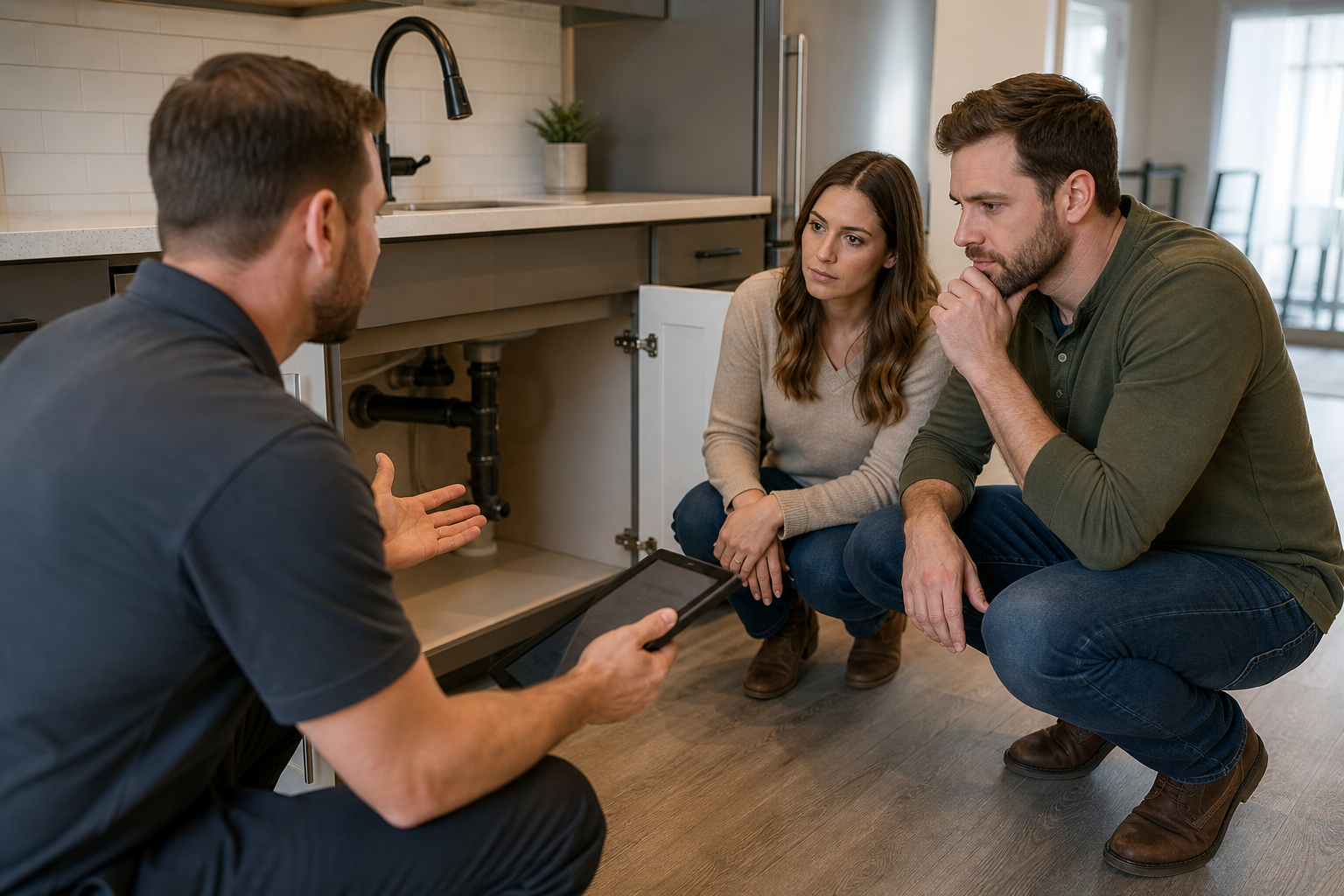
Use this simple order of priority when evaluating inspection findings: first address active safety and health risks such as sewage in living areas or active leaks; second consider systems near end of life like water heaters and corroded supply pipes; third evaluate repair cost relative to purchase price and timing constraints.
If the seller refuses repairs, options include negotiating a price credit, requiring an escrow holdback, or asking for a seller-paid quote and proof of completed work before closing. When you are on a tight closing timeline, obtain at least one priced repair estimate to decide whether to accept the condition, negotiate, or walk away. For cosmetic-looking issues that show underlying moisture, insist on diagnostic testing before accepting the risk.
Quick DIY plumbing checks you can do during a viewing
- Run each faucet and shower, and watch for slow drainage or discolouration.
- Flush each toilet, then run a sink and watch for gurgling or bubbling.
- Open cabinet doors and look under sinks for staining, dampness, or odour.
- Check the water heater label for age and look for visible corrosion or leaks.
- Smell floor drains and basement corners for sewage or mould odours.
These quick checks are useful, but remember a professional inspection will include measurements and tools that go beyond a visual walkthrough (homebuyer plumbing checklist).
Next steps if you find a red flag: testing, estimates and negotiation tactics
- Order targeted follow-ups: sewer camera, pressure testing, or thermal imaging when recommended.
- Get at least one licensed plumber estimate for any necessary repairs or replacements.
- Ask your home inspector to prioritise repairs in writing and include photos and cost guidance when possible.
- Negotiate based on urgency: require repair before closing for health or safety items, request credits or escrow for non-urgent system upgrades, or ask for seller-paid inspections within a fixed timeframe.
- If sewer backup is a risk, consult a plumber about a backwater valve and use the federal backwater valve guidance to confirm suitability and installation needs (Backwater valves - Canada.ca).
Need a certified plumbing-focused inspection in Calgary today
If you want same-day, technology-enabled plumbing checks, sewer camera referrals, or an expert opinion that translates findings into negotiating power, Spot On Inspections & Reviews offers certified, photo-rich reports and thermal imaging diagnostics to help buyers make confident decisions. Learn more or book a focused inspection at our website (Spot On Inspections & Reviews).
Frequently asked questions
How much does a targeted plumbing inspection or sewer camera inspection cost in Calgary?
Costs vary by scope, property size, and the specialist you hire. A targeted plumbing check can differ from a full home plumbing inspection, and a sewer camera inspection is typically quoted separately. Ask inspectors for an itemized quote and compare at least two licensed plumber estimates before committing.
Can a plumbing inspection detect a past or hidden sewer backup?
Inspectors can detect signs such as staining, odour, and repairs consistent with past backups, and they can recommend a sewer camera to confirm damage in the lateral. A professional evaluation is recommended to determine cause and remediation options.
When should a backwater valve be recommended for a Calgary home?
A backwater valve is recommended when the property is at risk of sewer backup due to grading, neighbourhood history, or evidence of prior backups. Canada.ca advises asking a professional installer to determine efficacy and installation needs based on the home’s plumbing layout (Backwater valves - Canada.ca).
Will thermal imaging find hidden plumbing leaks behind walls or ceilings?
Thermal imaging can reveal temperature differences and moisture patterns that suggest hidden leaks, but it is not definitive on its own. Inspectors often pair thermal scans with moisture meters or targeted openings and recommend camera or invasive testing when necessary.
What can I do if the seller refuses to address serious plumbing issues found during inspection?
Options include negotiating a price reduction, requesting a repair credit or escrow holdback, requiring the seller to provide licensed repair estimates, or making the sale conditional on completed repairs. If negotiations fail, you can use the inspection findings to withdraw under specified contingencies, depending on your offer terms.
If you would like a focused plumbing assessment or to book a same-day inspection, contact Spot On Inspections & Reviews for certified, technology-enabled reports and practical next steps.