HVAC inspection basics for Calgary homebuyers
What an HVAC inspection is and what it covers
An HVAC inspection is a non-invasive visual and operational review of a property’s heating, ventilation, and air conditioning systems. It is commonly done as part of a full home inspection or as a focused follow-up when mechanical concerns exist. The goal is to identify safety issues, visible defects, obvious signs of poor maintenance, and basic indoor air quality concerns that could affect comfort or future repair costs. A government resource notes that a good home inspection includes a visual evaluation of all main systems and components, including HVAC systems, and suggests asking whether recognized inspection standards will be applied during the visit (Office of Consumer Affairs).
Most home inspections are non-destructive, so an HVAC inspection will not dismantle equipment or perform advanced diagnostic testing unless specifically requested. When measurement or certification is required, the inspector will recommend the appropriate specialist for follow-up testing.
The core components inspectors check
An effective HVAC inspection concentrates on visible and operational elements that indicate safety, function, and maintenance needs. Below are the primary components inspectors typically review and which checks usually require an HVAC technician.
Furnace or air handler
- Visual condition of the unit and cabinet, signs of rust or separation, and accessible burner or combustion areas when safe to view.
- Evidence of soot, unusual odours, or improper venting that could indicate combustion safety issues.
- Whether service panels are missing or unsecured, and if maintenance access appears reasonable.
Filters and airflow
- Filter condition and size, visible dirt or restrictions, and a basic check of supply registers for obvious low airflow.
- Blocked returns, closed dampers, or debris that will reduce system efficiency and comfort.
Ductwork and vents
- Visible duct connections and insulation, signs of damage, disconnected runs in attics or basements, and excessive dust or mould around returns.
- A full duct leakage test is a specialist procedure not typically performed during a standard inspection.
Outdoor unit and refrigerant circuit
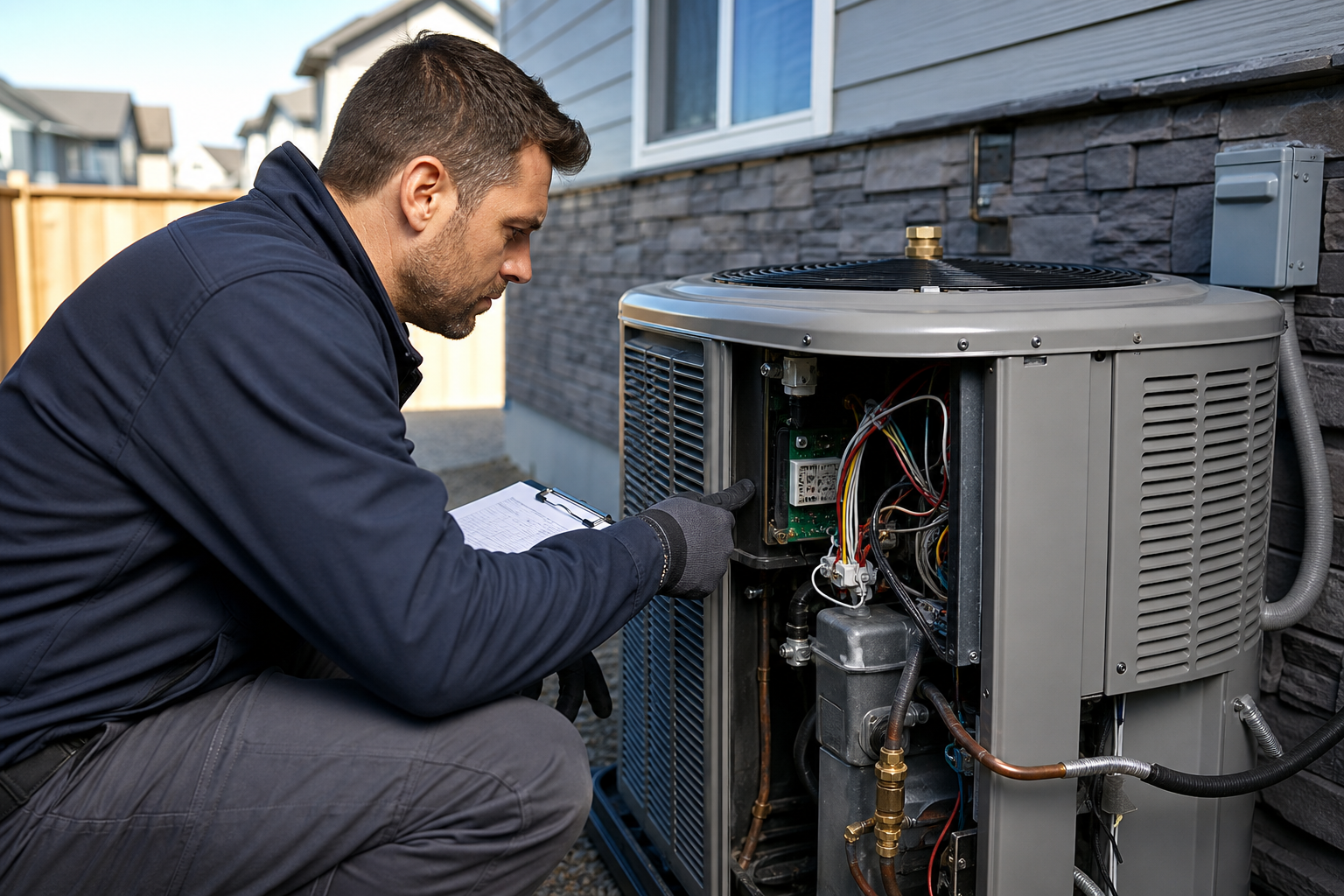
- Condition of the outdoor compressor or heat pump, obvious oil stains or corrosion, and a check for unusual noise while the unit operates.
- Leak detection and refrigerant pressure checks are specialist procedures not normally done during a visual inspection.
Condensate drains and humidification
- Clear condensate lines and evidence of past overflow that can cause interior water damage.
- Basic inspection of installed humidifiers or dehumidifiers for leaks and obvious maintenance needs.
Controls, thermostat and safety devices
- Thermostat operation and whether thermostats are logically placed for accurate temperature control.
- Visible safety devices, such as emergency shutoffs, and any obvious electrical issues at service connections.
Ventilation and exhaust fans
- Operation of kitchen and bathroom exhaust fans, make-up air provisions for tightly sealed homes, and visible duct discharges for clothes dryers.
Inspection limitations and when an HVAC specialist is needed
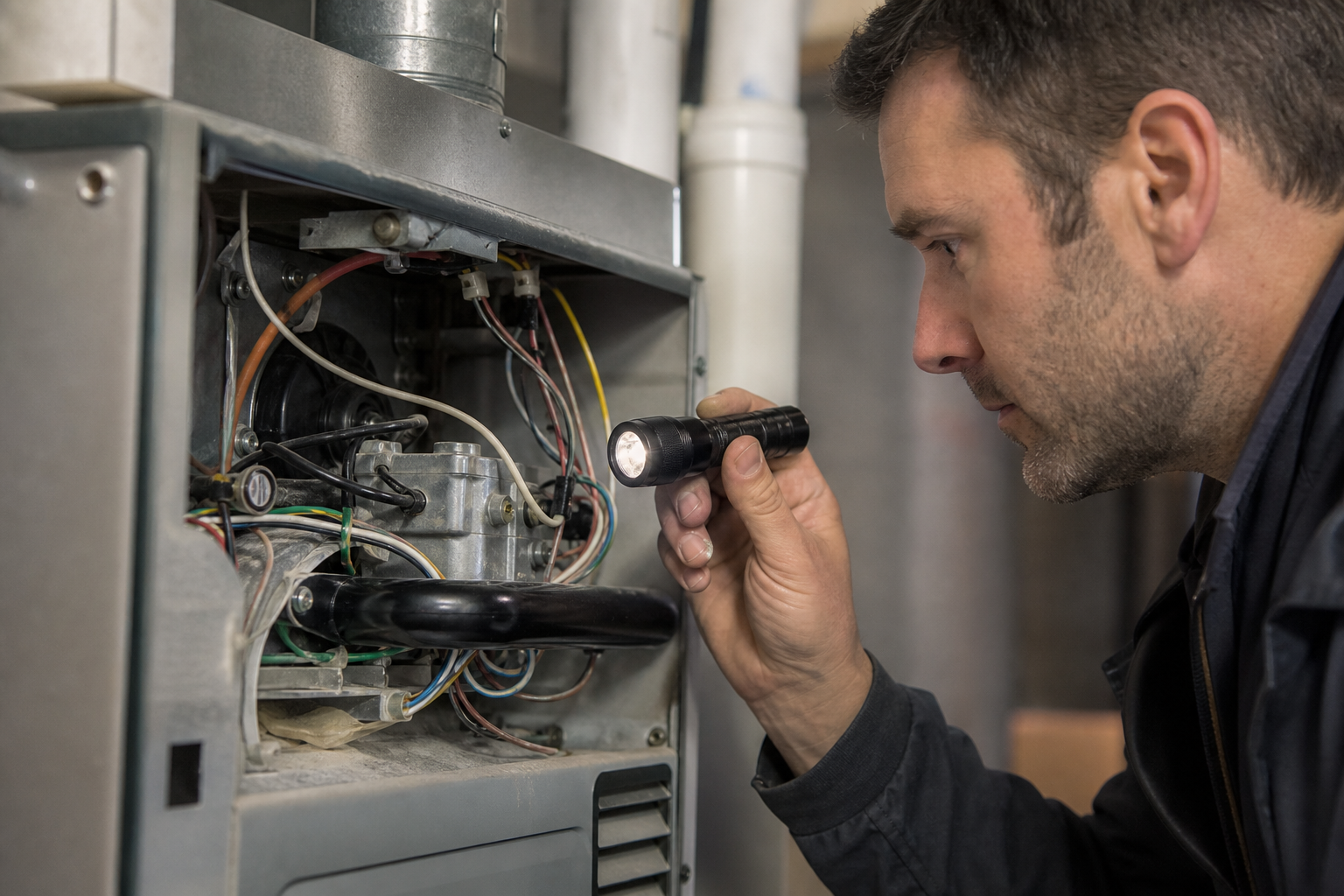
Inspectors perform mostly visual and operational checks. Health Canada guidance recommends that a building operator, engineer, or HVAC specialist take part in more detailed HVAC inspections for large or complex systems and provides a sample checklist for technical items such as fan orientation and duct cleanliness (Health Canada). When a unit shows signs of combustion failure, suspected refrigerant leaks, persistent moisture or mould, a specialist should perform combustion testing, refrigerant pressure measurement, duct leakage testing, or air quality sampling.
Common HVAC issues in Calgary and nearby communities
Several regionally relevant issues appear often during inspections. Knowing these helps buyers and sellers prioritise repairs and negotiate with better clarity.
- Aged equipment: Furnaces and air conditioners near typical manufacturer life expectancies are common and increase the chance of near-term replacement.
- Restricted airflow: Dirty filters, blocked returns, or closed dampers lower system performance and can cause overheating or reduced comfort.
- Duct dust and mould: Tight, renovated homes with little ventilation sometimes show elevated dust or mould around returns, which affects indoor air quality.
- Condensate blockages: Blocked drain lines can overflow and cause damage, often seen after prolonged non-use or improper winter maintenance.
- Outdoor unit corrosion: Winter salt and moisture can accelerate rust on outside compressors, reducing service life and increasing repair risk.
Inspection reports typically prioritise these items as safety concerns, major repairs, or maintenance recommendations, and include photos and plain-language notes to help you decide next steps.
Why an HVAC inspection matters for buyers, sellers and warranty checks
An HVAC inspection reduces uncertainty about mechanical condition. For buyers it clarifies hidden costs and safety risks that might influence offer terms. For sellers it identifies repairs or maintenance that improve market readiness. For new-home warranty checks, an HVAC inspection documents defects within warranty windows so they can be addressed by the builder. Spot On offers a targeted option for buyers in warranty periods through the new home warranty inspection service to support these checks.
Timing is important. In most transactions, order the HVAC check early in your conditional period if the system is older, records are incomplete, or the condo building has complex central systems. If you already have maintenance records, the inspector will use them, but a current operational review is still recommended.
When to add specialist tests or bring an HVAC technician
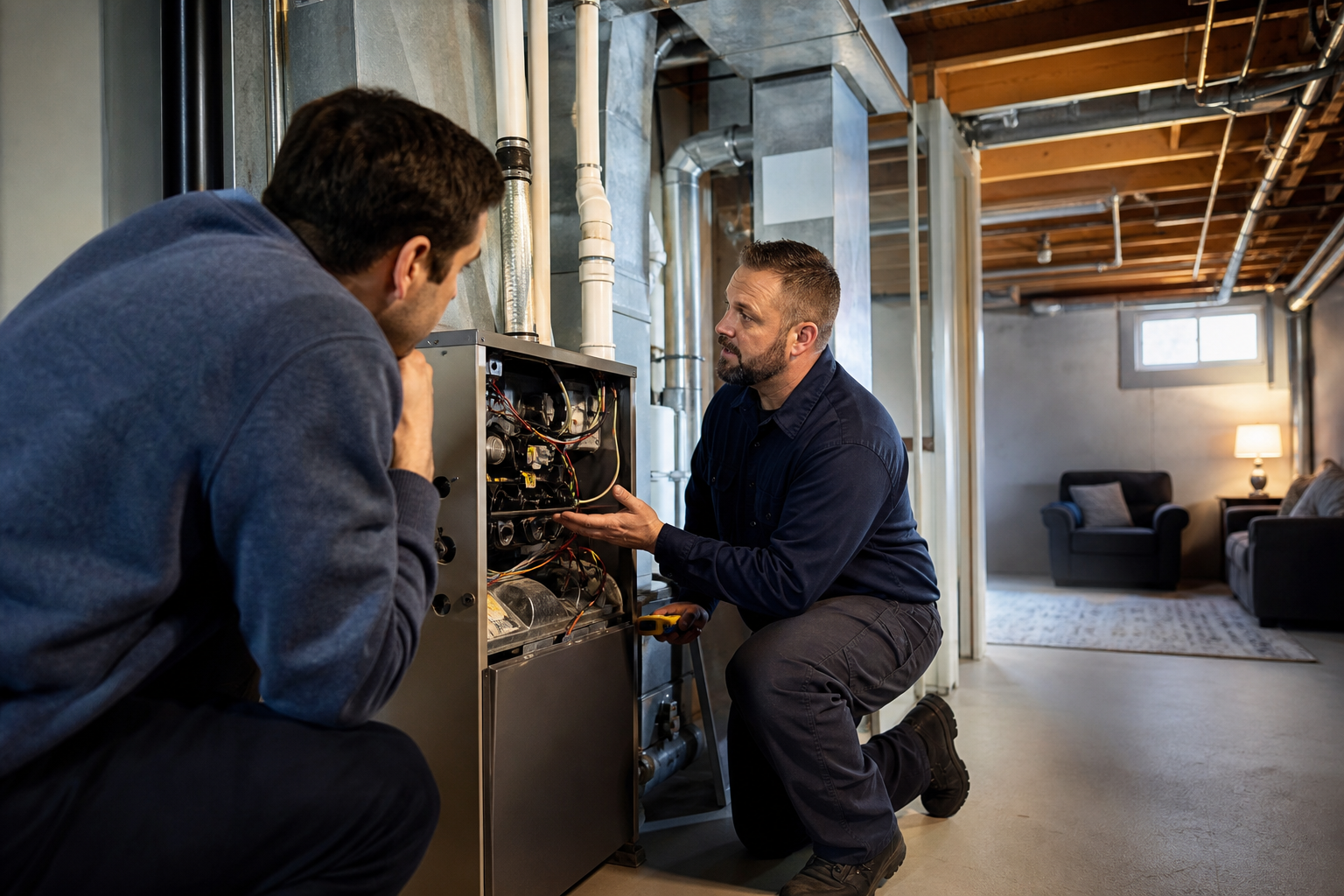
Consider specialist diagnostics when:
- The system is near expected end of life or its history is unclear.
- There are signs of combustion problems such as soot, continuous odours, or pilot light issues.
- There is suspected refrigerant loss, poor cooling performance, or unusual outdoor-unit noises.
- Persistent moisture or mould is suspected in ducts or around returns.
- The property is a multi-unit or commercial building with complex mechanical systems.
Common specialist options include combustion efficiency testing, refrigerant pressure checks, duct leakage testing, and air quality sampling. Thermal imaging is a valuable complementary tool that Spot On uses to reveal thermal anomalies, uneven duct temperatures, and hidden moisture paths, but thermal imaging does not replace pressure or combustion testing.
What to expect from a Spot On HVAC-related inspection
Spot On Inspections & Reviews provides technology-enabled inspections across Calgary, Airdrie, Chestermere and surrounding communities, and delivers same-day, photo-rich digital reports with clear recommendations. The report will prioritise safety items, major repairs, and routine maintenance, and the inspector is available to answer follow-up questions. Spot On also offers infrared thermal imaging as part of its inspection toolkit to help spot hidden issues not visible to the naked eye.
If you are within a builder warranty period, consider adding a new home warranty inspection to document defects before warranty deadlines expire.
How to use inspection results: negotiate, prioritise repairs and plan maintenance
After you receive the report, follow a simple, evidence-based approach:
- Address safety items immediately, such as combustion hazards or gas leaks.
- Treat major repair risks next, for example failing compressors or significant duct damage that can lead to higher bills or future failure.
- Schedule recommended maintenance tasks, like filter replacement and condensate line cleaning, to improve efficiency and longevity.
- Use documented defects in negotiations, or request repair holdbacks when appropriate. For condo buyers, combine HVAC findings with a condo document review to check reserve fund health and planned mechanical projects.
Frequently asked questions
Do I need a separate HVAC inspection when I book a pre-purchase home inspection?
Often the HVAC system is included as part of a full home inspection as a visual and operational check. If you have specific concerns, want specialist testing, or the property is high value or commercial, booking a dedicated HVAC inspection or requesting specific diagnostics is advisable. The Office of Consumer Affairs suggests asking whether recognised inspection standards apply during the inspection (official guidance).
How long does an HVAC inspection take and what does a same-day report include?
A focused HVAC inspection usually takes 30 to 90 minutes depending on system complexity. A same-day report from Spot On will include photographs, prioritised findings, and clear recommendations for repairs or specialist follow-up. The inspector will explain safety items and next steps to help you move confidently through the transaction.
Can an HVAC inspection tell me how many years of life are left in a furnace or air conditioner?
Inspectors can provide a reasoned estimate based on age, visible condition, maintenance history, and manufacturer guidance, but this is not a guarantee. For a precise life expectancy or performance forecast, a licensed HVAC technician can perform diagnostic testing and provide a detailed service life assessment.
When should I request thermal imaging or duct testing in addition to a visual inspection?
Request thermal imaging when you suspect hidden leaks, poor insulation, or uneven system temperatures. Add duct leakage testing if you see disconnected ducts, excessive dust or mould, or if energy efficiency is a priority. Thermal imaging is a powerful diagnostic tool, but pair it with specialist testing when a serious mechanical concern is suspected.
How does an HVAC check tie into a condo document review or reserve fund concerns?
For condo buyers, an HVAC inspection shows the condition of in-suite equipment and visible ventilation. A condo document review will reveal whether the corporation has planned mechanical projects, available reserve funds, or upcoming special assessments that could affect future HVAC work. Combining both services gives a fuller picture of near-term costs and building-level mechanical risk.
Next steps
If you are buying, selling, or verifying a warranty issue in Calgary or nearby communities, book an HVAC inspection or include HVAC checks with a full home inspection to reduce mechanical uncertainty. For buyers still within a builder warranty period, consider a dedicated new home warranty inspection to document defects before warranty deadlines pass.
Spot On Inspections & Reviews offers Alberta-wide inspections and same-day reports to help you make informed decisions. Visit the site to learn more or to schedule an inspection.
References: Office of Consumer Affairs guidance on home inspections, Health Canada guidance on indoor air quality and HVAC checklists, and Spot On Inspections & Reviews service information.