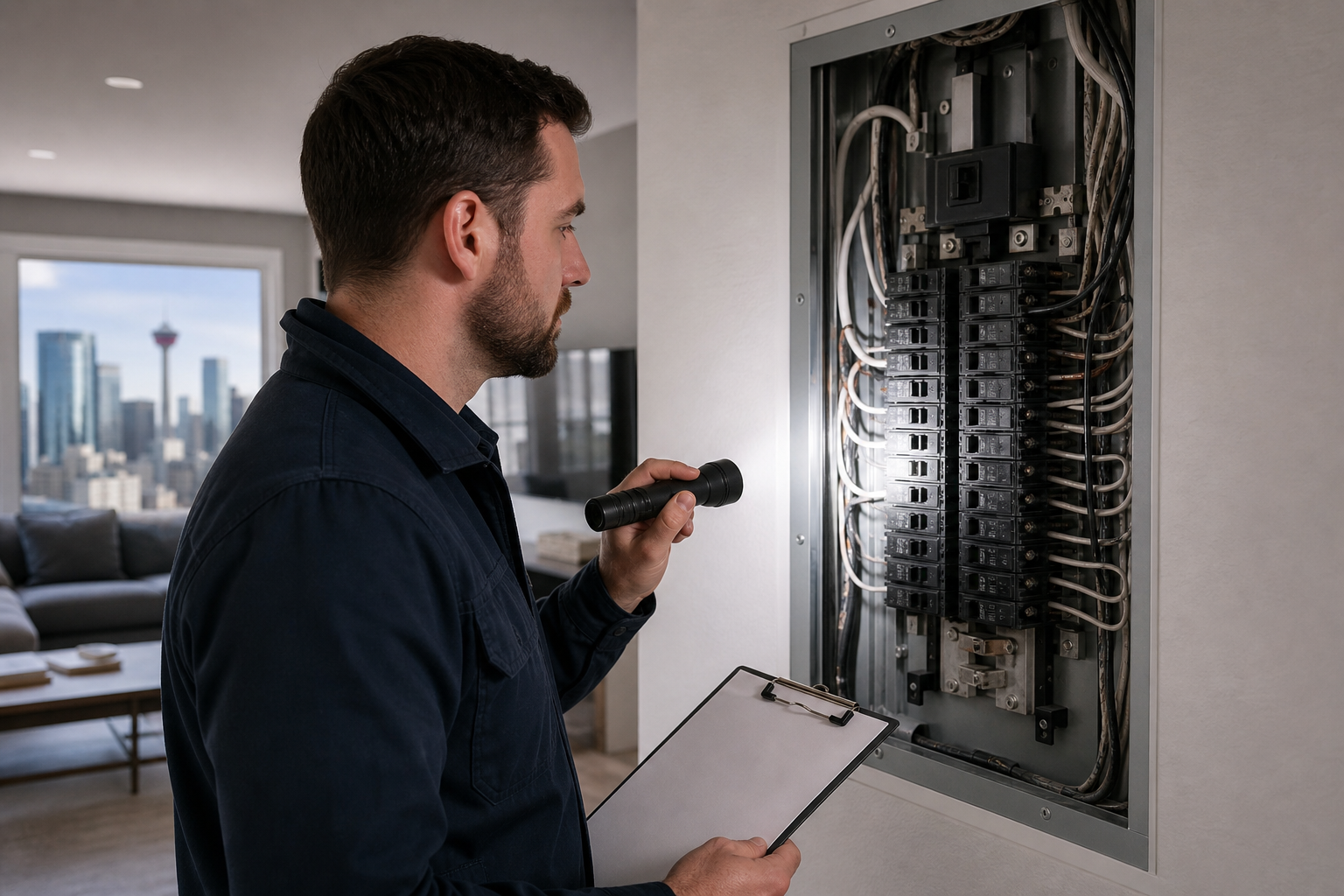
7-item electrical inspection checklist every Calgary homeowner can use
How to use this checklist
This checklist is a practical, non-invasive visual review you can do room by room to spot common safety concerns before you buy, sell, or schedule maintenance. It is designed for homeowners, landlords, property managers, and real estate buyers in Calgary and nearby communities who need a fast, evidence-based way to prioritise electrical risks and document findings.
Important scope and limits: a standard home inspection is a non-invasive, visual evaluation of main systems and components and does not include destructive testing or measurements behind finished surfaces. For that reason, follow-up work by a licensed electrician may be required for diagnostics or repairs. The Office of Consumer Affairs at Innovation, Science and Economic Development Canada explains the non-invasive nature of standard home inspections and what to expect.
Use this checklist to:
- Record location, date, and photos for every item you mark.
- Mark each item as "Urgent: act now", "Monitor: schedule if repeated", or "Note: informational".
- Bring urgent findings to your realtor or include them in conditions when buying; keep monitor items for routine maintenance.
For room-by-room safety guidance and common household checks, consult the U.S. Consumer Product Safety Commission's Home Electrical Safety Checklist while inspecting outlets, cords, and fixtures.
The 7-point electrical inspection checklist
1. Service panel, breakers, and labels
What to look for: metal panel door and cover closed, no rust or water stains, breakers clearly labelled, and no loose wiring visible at the cover edge.
Priority: Urgent if you find scorch marks, burning smell, water stains from intrusion, loose breakers, or a warm panel surface. Monitor if labels are missing or inaccurate.
Homeowner action: Photograph the panel, note breaker labels or the lack of them, and record any odour or heat. If labels are missing, ask the seller or building manager for a circuit map.
Call an electrician when: breakers trip repeatedly, you detect burning smells or scorch marks, the panel is warm to the touch, or the panel still uses fuses instead of modern breakers.
2. Outlets and switches
What to look for: cracked or discoloured receptacle faces, loose-fitting plugs, outlets missing cover plates, three-prong outlets that accept three-prong plugs, and GFCI or AFCI devices in required locations such as bathrooms, kitchens, garages, and outdoor outlets.
Priority: Urgent for hot or sparking outlets, smoking, burning odour, or exposed wires. Monitor for loose outlets or cracked covers and replace covers as a quick homeowner fix.
Homeowner action: Test accessible GFCI outlets by pressing the test and reset buttons. Replace cracked covers and tighten loose outlets only with power off at the breaker.
Call an electrician when: outlets are warm, arcing occurs when plugging in appliances, three-prong plugs have been forced into two-prong outlets by modification, or GFCIs fail to reset reliably.
3. Lights, fixtures, and switches
What to look for: burnt or flickering lights, loose fixtures, missing bulbs or incorrect wattage labels, and signs of overheating at switch plates.
Priority: Urgent for flickering that follows no obvious bulb issue, visible sparks when switching, or charred switch plates. Monitor for loose fixtures or incorrectly rated bulbs.
Homeowner action: Replace bulbs with the correct wattage and tighten loose fixtures with power off. Note recurring flicker patterns and whether they affect whole rooms or single fixtures.
Call an electrician when: multiple fixtures flicker simultaneously, switches spark, or you smell burning from a fixture or switch.
4. Cords, appliances, and portable heaters
What to look for: frayed cords, cords pinched under furniture, use of extension cords as permanent wiring, and portable space heaters placed without clear thermal clearance from combustibles.
Priority: Urgent for exposed conductors, melted insulation, or appliances that spark. Monitor heavy-duty appliance cords for wear and keep extension cords for temporary use only.
Homeowner action: Unplug and replace damaged cords and avoid running cords under rugs. Keep portable heaters clear of combustibles and follow manufacturer instructions.
Call an electrician when: large appliances cause frequent breaker trips, motors make unusual noises, or building wiring appears undersized for modern appliances.
5. Visible wiring and junction boxes
What to look for: open junction boxes, splices not contained in a box, exposed wiring in basements or crawlspaces, and any aluminium branch wiring in older homes.
Priority: Urgent for exposed live conductors or missing junction-box covers. Monitor cosmetic insulation damage that does not expose conductors.
Homeowner action: Photograph open boxes and exposed wiring, then secure or tape off areas to prevent accidental contact until a professional assesses the situation.
Call an electrician when: you see exposed live conductors, splices outside boxes, burn marks, or suspect aluminium wiring; these require professional corrections to meet safety standards.
6. Exterior outlets, lighting, and garage wiring
What to look for: weatherproof outlet covers, functioning exterior GFCIs, secure porch and garage fixtures, and no water intrusion into fixtures or conduit.
Priority: Urgent for outlets that do not reset, water inside fixtures or conduit, or sparking outdoors. Monitor minor corrosion on covers that does not affect function.
Homeowner action: Test exterior GFCIs and replace worn covers. Note any locations where outdoor outlets are missing covers or appear to have been modified.
Call an electrician when: outdoor outlets fail to provide power reliably, you find water in a fixture, or garage door opener wiring looks compromised.
7. Attic, basement, furnace, and HVAC electrical items
What to look for: wiring around furnaces and hot water tanks, clearances to mechanical equipment, proper junction boxes in attics, and any visible overheating on motors or connections.
Priority: Urgent for scorched connections near mechanical equipment, buzzing or humming motors, or visible arcing. Monitor minor dust accumulation but note any signs of burning.
Homeowner action: Photograph suspect connections and avoid operating equipment that shows signs of overheating until inspected. Keep attics ventilated and accessible for inspection photos.
Call an electrician when: motors hum loudly, control wiring shows discoloration, or you suspect an overloaded circuit feeding HVAC or mechanical systems.
When to call a licensed electrician
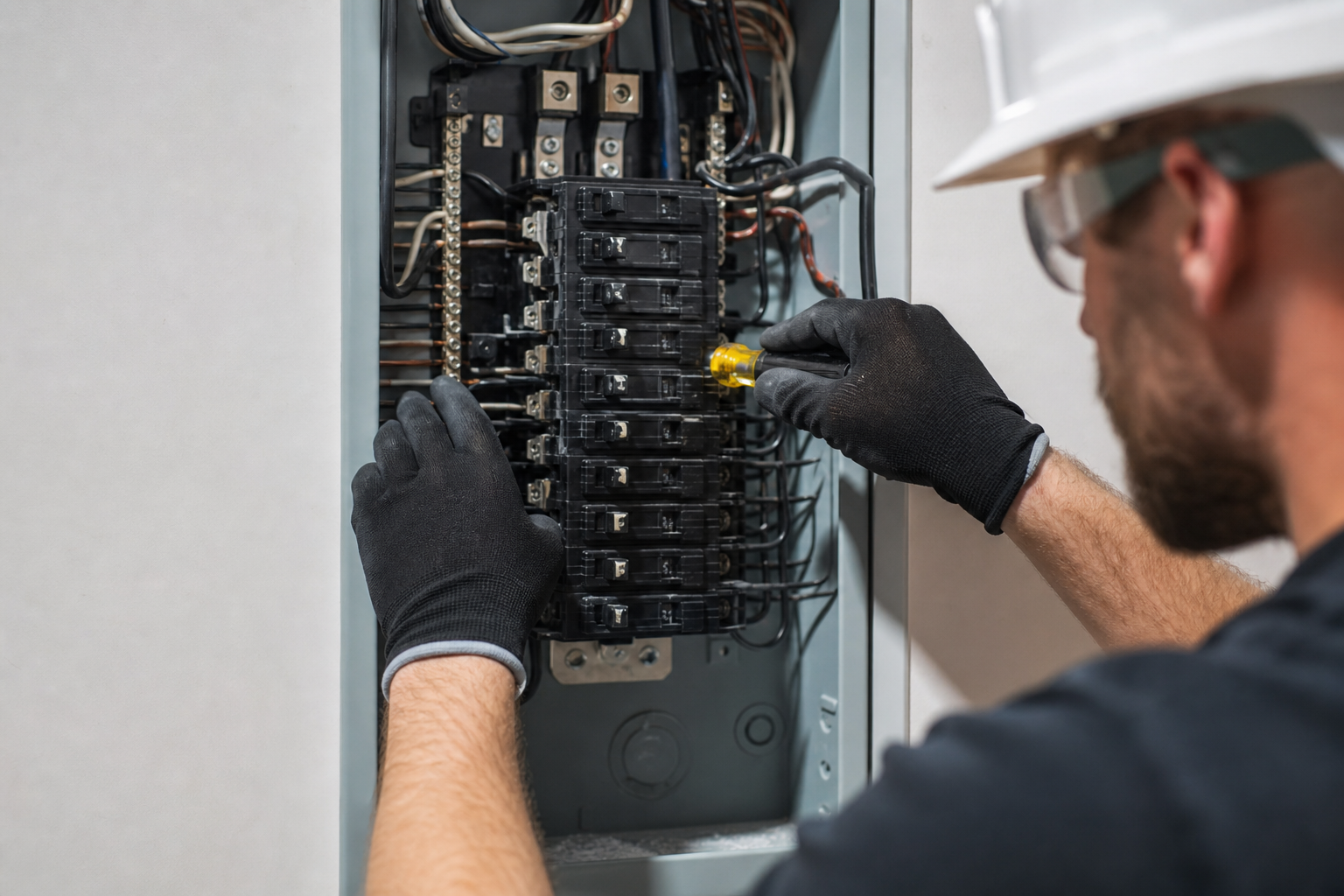
Call a licensed electrician immediately if you encounter any of the following red flags:
- Sparks, smoking, burning smells, or scorch marks near outlets, switches, fixtures, or the service panel.
- Repeated breaker trips or breakers that will not reset.
- Warm or hot outlet or switch cover plates under normal load.
- Exposed live wiring, open junction boxes, or splices outside approved boxes.
- Aluminium branch circuit wiring in older homes, which can present connection risks.
These conditions pose an immediate fire and safety risk and require professional diagnostics and corrective work. For routine household inspection cadence and room-by-room examples, see the Home Electrical Safety Checklist from the U.S. Consumer Product Safety Commission and the electrical safety checklists compiled by NIOSH at the Centers for Disease Control and Prevention.
How a professional inspection differs from this checklist
This homeowner checklist is a visual screen. A certified home inspector provides a thorough, non-invasive evaluation of visible electrical systems, including panel condition, junction boxes, and exposed wiring. A licensed electrician can perform diagnostic testing, load calculations, thermal imaging to reveal hot circuits, and invasive examinations when needed. ISED Canada describes the standard scope and limits for home inspections.
Spot On Inspections & Reviews offers technology-enabled inspections that include infrared thermal imaging to reveal hot circuits and same-day, photo-rich digital reports to help buyers and sellers act quickly. For follow-up work that requires testing or repairs, a licensed electrician will provide permits, load testing, and code-compliant repairs.
Local tips for Calgary, deadlines, and tight real estate timelines

If you are buying or selling in Calgary, Airdrie, Chestermere, or nearby communities, document every concern with a clear photo, the breaker or room name, and the date. Real estate condition deadlines often allow only 24 to 72 hours to arrange follow-up inspections or quotes. Having same-day digital reporting speeds decision-making when you must remove conditions quickly. Spot On Inspections & Reviews provides same-day reports, thermal imaging options, and local scheduling to help meet tight timelines. Learn more about how home inspections fit common transaction timelines in this home inspections Calgary smart guide safe home purchase.
When you identify urgent electrical hazards during a subject removal window, notify your realtor and the seller immediately, and schedule an electrician’s visit as soon as possible. Keep receipts and written estimates to support negotiation or condition removal documentation.
Printable checklist, FAQ, and next steps
Quick printable one-page checklist (use these as the headings for your notes):
- Service panel: _____ (Urgent / Monitor / Note) Photo: _____
- Outlets & switches: _____ Photo: _____
- Lights & fixtures: _____ Photo: _____
- Cords & appliances: _____ Photo: _____
- Visible wiring & junctions: _____ Photo: _____
- Exterior & garage: _____ Photo: _____
- Attic/basement/HVAC wiring: _____ Photo: _____
Next steps after you complete the checklist:
- Prioritise items marked Urgent and call a licensed electrician right away.
- For Monitor items, schedule routine repairs or request estimates for negotiations.
- If you need a fast, documented inspection with thermal imaging and same-day reporting, consider booking a certified inspection for a clear record to support offer conditions or repairs.
Frequently asked questions
Can I rely on this checklist instead of hiring an electrician or a full home inspection
This checklist helps you identify visible safety concerns and document them, but it does not replace a licensed electrician for diagnostic testing or a full professional inspection when required. A standard home inspection is non-invasive and assesses visible electrical systems; for invasive testing, load calculations, or repairs you must hire a licensed electrician. See ISED Canada for the standard scope of home inspections.
What are the top three electrical red flags that need immediate attention
Sparks or burning smells, repeated breaker trips that cannot be cleared, and exposed live wiring or open junction boxes are the most urgent issues. These conditions present fire and shock hazards and require immediate professional attention.
How quickly can I book a follow-up inspection or thermal imaging scan in Calgary
Local availability varies, but same-day or next-day appointments are common for urgent items. Spot On Inspections & Reviews offers same-day digital reports and thermal imaging to speed the diagnostic process for buyers and sellers facing tight timelines.
Will a standard home inspection check wiring behind walls or perform load testing
No. Standard home inspections are visual and non-invasive. Inspectors identify visible issues and may recommend further evaluation; an electrician performs load testing, circuit tracing, and invasive diagnostics when needed.
What should I do if an outlet is warm or I smell burning after using an appliance
Stop using the outlet and unplug the appliance if it is safe to do so. Photograph the outlet and the appliance plug, mark the outlet as Urgent, and contact a licensed electrician immediately. Repeated warmth or a burning odour can indicate loose connections or overloaded circuits and is a fire risk.
For authoritative safety guidance and printable checklists see the U.S. Consumer Product Safety Commission's Home Electrical Safety Checklist and the NIOSH electrical checklists from the Centers for Disease Control and Prevention. For Canadian home inspection scope information visit Innovation, Science and Economic Development Canada.
For a practical, documented inspection with thermal imaging and same-day reporting to support real estate timelines, book Spot On Inspections & Reviews at the official website. For local advice on inspection timing, see our home inspections Calgary smart guide safe home purchase.